
Laboratory Information:
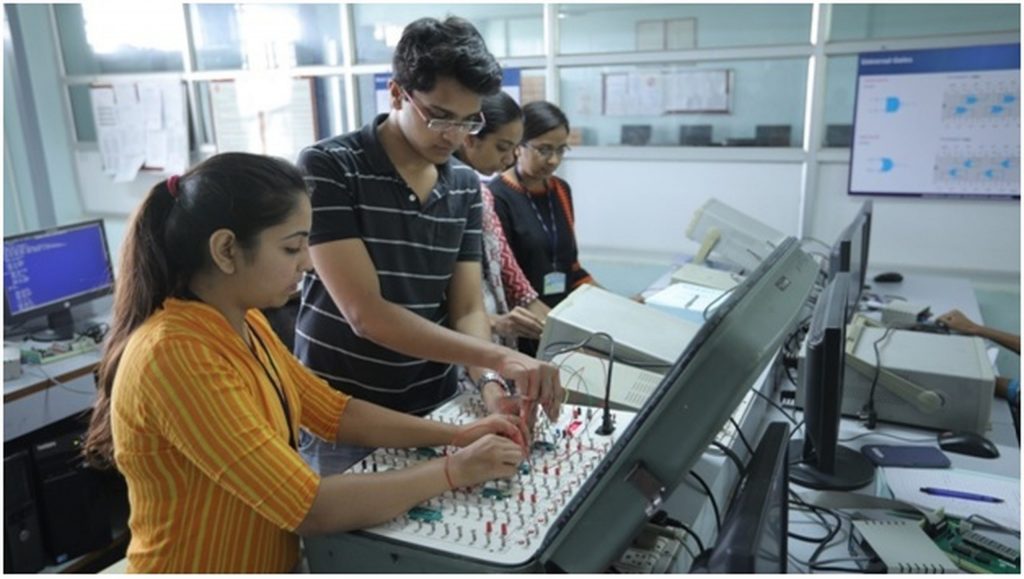
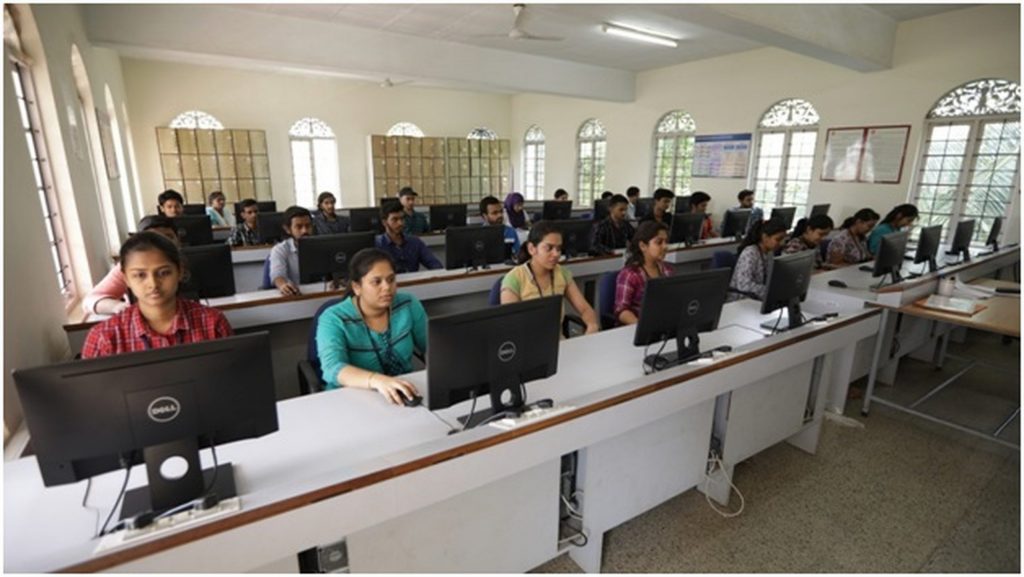
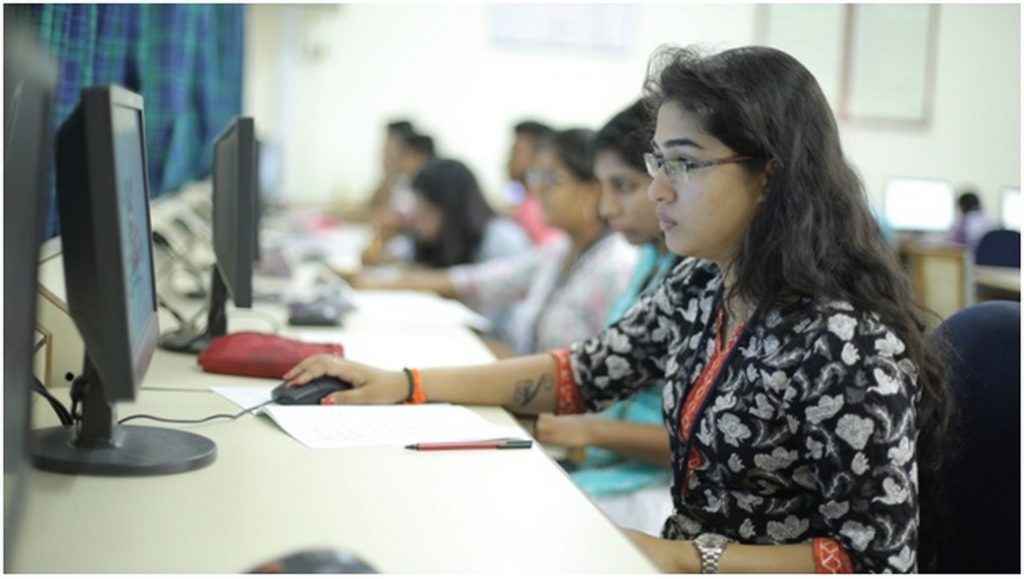
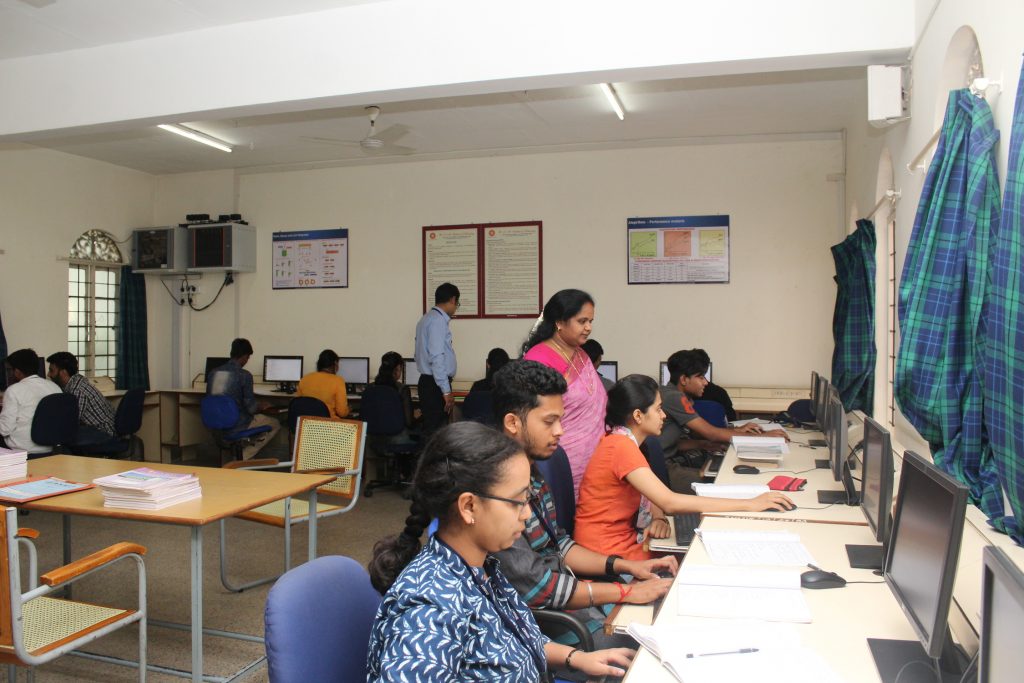
The department is well equipped with 6 laboratories. Laboratories are equipped with the latest machines with high-end configurations working in a fully networked environment, using client-server architecture. Each machine has full access to broadband internet highway. It provides an excellent learning platform for both student and researcher staff alike. Students have exclusive one-to-one computing facilities through well-furnished separate Labs. The labs have 124 PCs with the latest configurations running Windows as well as Linux. The laboratories are supported with software such as Oracle 9i, MS Visual Studio, MAT Lab, Microsoft word 2007, gcc compiler, g++ compiler, CC Compiler, Turbo C++ Compiler, Netbeans, Ubuntu, MySQL, Eclipse, Apache Web Server and JDK.
Python Lab
The Python Lab is equipped with modern computing systems, updated software environments, and high-speed internet to support effective learning. Each System is preloaded with the latest Python distributions, IDEs such as PyCharm and VS Code, and essential libraries required for academic and project work. The lab provides facilities for hands-on practice in scripting, data processing, file management, and database connectivity. Students can access tools for web scraping, PDF handling, JSON manipulation, and regular expression testing. The environment encourages experimentation and real-time coding, supported by digital resources, reference material, and guided demonstrations. These facilities collectively ensure a comprehensive and engaging learning experience in Python programming.
Data Structures Lab
Data Structures and Applications Lab provides in depth knowledge about different data structures that is used to store the data such as stacks, queues, linked list, trees etc. The programs helping students in understanding working of various data structures studied in theory syllabus.The study experiment helped in understanding the need and working of Data Structures used in the real-time applications.
Design & Analysis of Algorithms Lab
The objective of this lab is to build a solid foundation in algorithms and their applications. Students will learn several fundamental principles of algorithm design, complexity analysis of Algorithms, followed by problems on Graph Theory and Sorting methods.This Lab enables students to understand the various types of algorithms, analyze the level of complexity in choosing and applying algorithms for the problems to create a real time application. The study experiment helped in understanding the need and working of algorithms used in the real-time applications.
Microprocessor and Microcontroller Laboratory
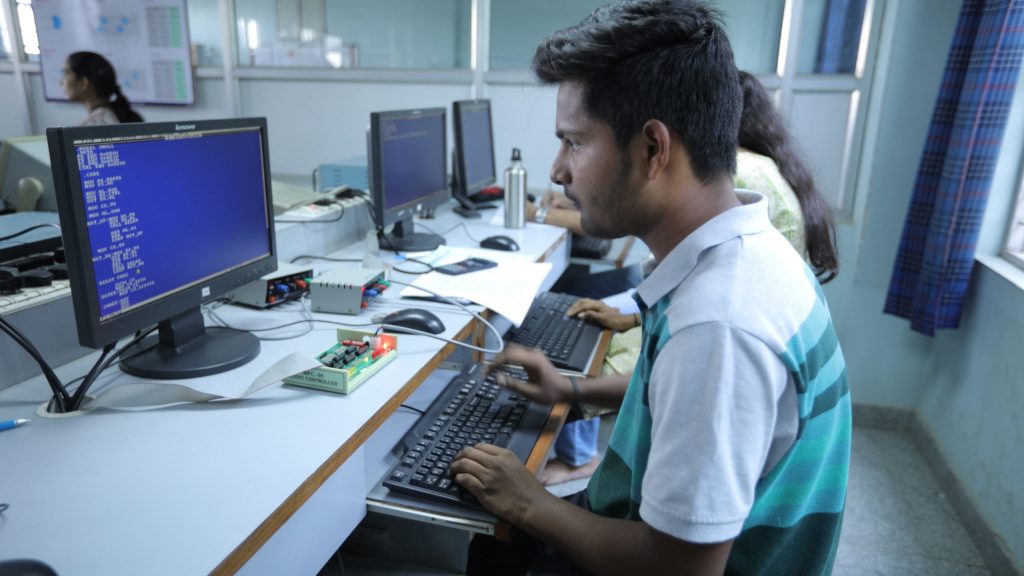
The objective of Microprocessor and Microcontroller Laboratory is to design, develop and execute the assembly language programs written using 8086 instruction set and ARM 7 instruction sets. The programs developed using 8086 instruction set are executed using MASM ( Microsoft Assembler) software and ARM related programs using KEIL software. The experiments related to 8086 microprocessor of the lab includes interfacing various external kits such as Logical controller interface, 7-segment display interface, stepper motor interfaces and Digital to Analog Convertor (DAC) interface. The hardware experiments related to ARM -7 microcontroller of the lab includes interfacing various external kits such as liquid crystal display (LCD), stepper motor interfaces and power saving system.
DBMS Laboratory With Mini Project
The objective of this course is to develop the ability to design, implement and manipulate databases as well as to build Database management systems. This course provides an introduction to systematic database design approaches covering conceptual design, logical design and an overview of physical design. This course consists of a total of 5 experiments that help students to understand the information taught in theory classes. The SQL query execution made them to understand the concepts of set operations, relational algebra, data manipulation, view. The laboratory sessions provide information about introduction to DBMS lab, creation of queries, organization of records, data manipulation, and transaction management techniques.
The course includes a Mini Project, which helps to apply various SQL operations and techniques on the database like concurrency control, relational algebra, views, normalization and transaction processing, etc.
RPA Lab
The Robotic Process Automation Lab is equipped with advanced computing systems and RPA software platforms from UiPath to provide a practical, industry-oriented learning environment. Each system is configured for designing, developing, and deploying automation workflows. Students have access to tools for screen scraping, data extraction, process recording, and bot orchestration. The lab also includes resources for integrating RPA solutions with enterprise applications, databases, and web services. High-speed internet, cloud-based automation environments, and virtual machines support real-time testing and execution of bots. Comprehensive documentation, tutorials, and guided demonstrations are available to help students build scalable automation solutions. These facilities ensure that learners gain hands-on experience in automating business processes and preparing for real-world RPA applications.
Computer Networks Lab
Computer networks form an integral part of a computer science and engineering graduate, they learn different types of network topologies, management commands, OSI model, various protocols and their implementation. In this lab, students demonstrate the operation of networks and its management commands using network simulation tool i.e, NS2. They also find the performance of GSM and CDMA wireless networks. In this lab they implement the Data Link Layer and Transport Layer protocol.
Web Programming Lab
The objective of this lab is to design web pages using markup languages like XHTML, CSS, PHP, and MySql. It mainly concentrates on the development of webpages. The lab also concentrates on backend designing of web pages by using server-side scripting, PHP and database MySql. The programs for front end development and back end development are executed on Ubuntu operating system. The mini-project implementation and demonstration will be carried out in the lab by a team of two or three students by using the languages and tools of their preferences.
Computer Graphics Laboratory
The Computer Graphics Laboratory provides students with practical exposure to the concepts of graphics and visualization by combining theoretical knowledge with hands-on programming. It enables learners to design and implement 2D and 3D transformations, clipping algorithms, and animation. Using tools such as OpenGL/GLUT, C/C++ or Python libraries, students develop skills in creating interactive graphics applications, modeling objects, rendering scenes, and simulating motion. The lab also fosters creativity and problem-solving by encouraging mini-projects like game design, visual simulations, and interactive graphical interfaces, thereby preparing students for fields such as multimedia, virtual reality, and computer-aided design.
Big Data Analytics Lab
The Big Data Analytics Lab provides hands-on experience in processing, analyzing, and extracting meaningful insights from large-scale, complex, and heterogeneous data sets. The lab equips students with practical skills in distributed computing, data storage, and advanced analytics using industry-standard big data tools and frameworks.In this lab, students learn to work with technologies such as Hadoop, HDFS, MapReduce, Apache Spark, Hive, Pig databases. Emphasis is placed on data ingestion, preprocessing, batch and real-time analytics, and visualization techniques to support data-driven decision-making.
By the end of the lab, students will be able to design, implement, and evaluate big data analytics pipelines, interpret analytical results, and apply big data technologies effectively in academic research and industry-oriented problem solving
Machine Learning Lab
Machine learning lab includes the implementation of various machine learning algorithms like supervised, unsupervised and reinforcement learning. The objective of this lab is to give an insight on how to train the machine using various algorithms that they learn in the theory. They also learned how to find the relevant datasets and how to use them in their program. The supervised learning algorithms like Find-S, Candidate key elimination, Decision tree learning, Back propagation neural networks, Baye’s classification algorithms were implemented using Python. The course also includes the implementation clustering algorithms like EM algorithm, K-means, KNN and Locally Weighted Regression algorithm using python.
AR/VR LAB
An AR/VR lab is a specialized learning and research environment designed to create, experience, and study immersive technologies such as Augmented Reality (AR) and Virtual Reality (VR). The lab provides a platform where digital content is blended with the real world in AR, or completely simulated environments are created in VR, allowing users to interact with 3D objects in a highly engaging and realistic manner.
Overall, an AR/VR lab enhances experiential learning, fosters innovation, and supports interdisciplinary research by combining computer science, engineering, design, and domain-specific knowledge. It plays a crucial role in preparing students for emerging technologies and future industry requirements.
Project Lab
There is the main project, in the 8th semester to enhance the technical caliber of students. Students are made familiar with their projects. A dedicated unique Project Lab is designed to give the students the best of facility and exposure to take up their projects to complete their degree requirements. Projects related to societal, cutting edge and research areas are currently being pursued by students.
Department Library
The department maintains a Library for staff and students, which includes reference books, university question papers, seminar and project reports.
Teaching Learning Method
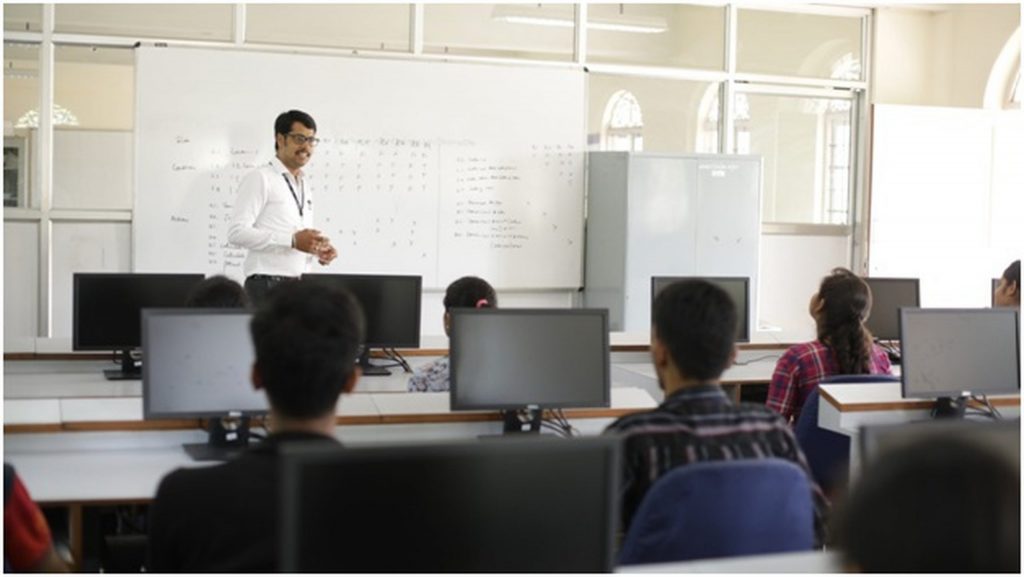
The department has a well equipped audio-visual class rooms consisting of computer with LCD, OHP and other teaching software. With E-Shikshana, the college is now well equipped for e-classes.